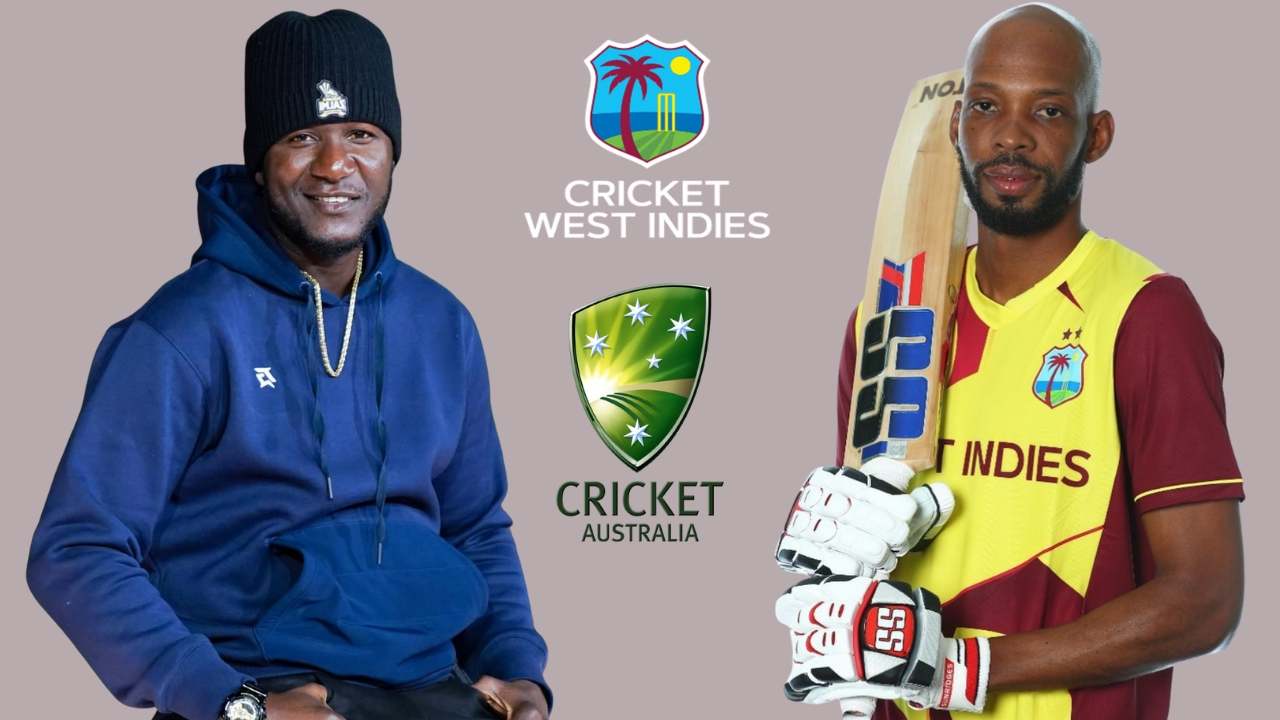
The first Test between West Indies and Australia at Kensington Oval ended in a 159-run defeat for the hosts—but not before it sparked a major controversy over umpiring decisions that left the West Indies camp fuming. At the center of the storm: third umpire Adrian Holdstock and a series of disputed DRS calls that triggered public outrage from West Indies head coach Daren Sammy and captain Roston Chase.
A match riddled with controversial calls
West Indies’ frustrations boiled over after a series of questionable umpiring decisions swung momentum against them. The dismissals of captain Roston Chase and wicketkeeper-batter Shai Hope were particularly contentious.
Chase was adjudged LBW by third umpire Adrian Holdstock despite what appeared to be a clear inside edge. “I disagree with the decision,” said Ian Bishop on commentary. “I disagree with the technology there, I thought he hit that. I feel sorry for the officiating team there, but in my view, that clearly should have been not out. (Chase) is in bewilderment.”
Shakeera Selman agreed: “It seemed to have taken the inside edge of the bat. We all felt there was an edge before it came into contact with the pad.”
Hope, meanwhile, was caught behind despite replays suggesting the ball may have touched the ground before being taken cleanly by Alex Carey. Greg Blewett noted, “It appears as though it touches the ground. I agree with the sentiments of the West Indies dressing room that they feel like they’ve been on the wrong end of some of the calls today.”
Even early in the innings, when a review on Chase showed a spike on UltraEdge before contact with the bat, the not-out call stood. Carlos Brathwaite explained, “That little spike in the frame before, I’m being told, is in between frames. Anything in the centre of (the graphic) is what they consider to be the Ultraedge frame, not the edges on the left or right.”
Sammy’s critique and ICC’s swift action
Head coach Daren Sammy didn’t hold back in his Day 2 post-play press conference.
“I had a chat with the match referee trying to find some understanding of what the process is,” Sammy said. “We only hope for consistency in the decision making. When there’s doubt in something, just be consistent across the board. From the images that we’re seeing, the decisions are not fair enough for both teams. I’ve asked the match referee for a sit down. We’re all humans, mistakes will be made, I just want fairness.”
The ICC acted swiftly. Sammy was fined 15% of his match fee and handed one demerit point for violating Article 2.7 of the ICC Code of Conduct, which prohibits “public criticism of, or inappropriate comment in relation to an incident occurring in an International Match or any Player, Player Support Personnel, Match Official or team participating in any International Match, irrespective of when such criticism or inappropriate comment is made.”
“Sammy was penalised for criticising one of the umpires during the press conference at the end of the second day’s play,” the ICC noted in its statement. “The criticism of the umpire related to several incidents that occurred throughout the match.”
Chase demands accountability for umpires
Captain Roston Chase didn’t mince words in the post-match fallout.
“There were so many questionable calls in the game and none of them went our way,” he said. “As a player, you’re out there giving your all and then nothing is going your way … it breaks a lot of momentum.”
He continued, “You saw what set batters could do on that wicket. Once you got in, you could get runs, but the hardest part was to get in. Shai Hope and I were going well and then we had some questionable calls and that really set us back in terms of creating a big lead on the total that Australia set.”
Beyond just disappointment, Chase called for structural accountability.
“This game is a frustrating one for me and for the team because we bowled out Australia for a relatively low score. We were very happy with that. But then there were so many questionable calls in the game, and none of them went our way. I mean, as a player, you’re out there, you’re giving your all, you’re fighting. And then nothing is going your way,” he said.
“It’s clear to see anyone would feel bad or feel hurt about those decisions. You’re out there playing to win, giving it your all, and it seems like everyone is against you. It’s frustrating because as players, when we mess up, when we get out of line, we’re penalised harshly,” Chase argued. “But the officials, nothing ever happens to them. They just have a wrong decision or questionable decision, and life just goes on. You’re talking about guys’ careers. One bad decision could make or break a guy’s career. I just think that it should be an even playground in terms of when players step out of line, they’re penalised. I think that there should be some penalty put in place when you have blatant decisions going against you.”
A growing call for officiating reform
With the Test series moving to Grenada for the second match, West Indies’ grievances have not only spotlighted officiating consistency but also reignited debate about decisions, even with the use of technology.