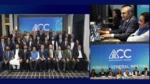
The International Cricket Council (ICC) has announced a sweeping set of changes to the playing conditions across men’s international cricket, introducing measures aimed at improving game flow, consistency, and fairness across formats. These updates, affecting Tests, ODIs, and T20Is, will be rolled out in phases starting with the 2025–27 World Test Championship and various white-ball competitions from July 2025.
Stop clock, new DRS rules and fair play tweaks in Tests
Among the most notable reforms is the introduction of a stop clock in Test cricket. Already familiar in white-ball formats, the rule requires the fielding team to be ready to bowl the next over within 60 seconds of the previous one ending. Teams will receive two warnings before a five-run penalty is enforced. The count resets every 80 overs.
The rulebook has also been clarified on saliva use. While saliva remains banned, umpires are no longer obligated to change the ball if it’s unintentionally applied. If no undue advantage is gained, play continues; but if the ball behaves unusually, the batting side will be awarded five runs—without requiring a ball change.
On the issue of deliberate short runs, the penalty of five runs stands, but the fielding team now gets to choose which batter faces the next delivery. This adds a layer of tactical nuance and discourages intentional infractions.
DRS protocols have been updated to align decisions with original calls. If a batter reviews an “out” decision for a catch and it’s determined the ball struck the pad, the third umpire will proceed to check for LBW. Crucially, the original “out” status will now carry through to ball-tracking, meaning that if it’s umpire’s call, the batter will still be given out.
In instances where multiple appeals occur on the same delivery—such as LBW followed by a run-out—the sequence of reviews will now follow the order in which events occurred. Once a batter is confirmed out on the first appeal, the ball is considered dead, and subsequent appeals are disregarded.
Even catches on no-balls must now be reviewed for cleanliness. If the catch is clean, the batter is not out, but only the run for the no-ball is added. If the catch is not clean, the batting team keeps all the runs made on the play.
White-ball changes: ODI ball rotation and T20I precision
In ODIs, a single ball will now be used from both ends after the 34th over, selected by the fielding team from the two balls used earlier. This aims to restore the balance between bat and ball in the final overs.
Boundary catch regulations have also been revised. Any fielder who jumps from beyond the boundary must make first and second contact with the ball only after re-entering the field of play. These clarifications bring tighter control to airborne relay efforts near the ropes.
T20Is to adopt ball-based powerplays and pre-match concussion rosters
In a significant change to T20I dynamics, powerplay calculations in reduced-overs matches will now be rounded to the nearest ball instead of the nearest over. This ensures the powerplay always reflects roughly 30% of the innings, improving proportional fairness.
“This table has been used in the T20 Blast in England for many years, where ending a powerplay midway through an over has caused no difficulty for players or officials. It has now been accepted by the ICC Men’s Cricket Committee as the preferred method moving forward,” the ICC told the members.
“In the 8 over example above, the umpire will make the signal after 2 balls of the 3rd over, at which point three further fielders are able to drop back from within the circle,” the ICC added.
In terms of player safety and substitution, all T20I teams must now pre-nominate five concussion replacement players—including one batter, one wicketkeeper, one pace bowler, one spinner, and one all-rounder. This aims to avoid mid-match advantages, especially for home teams with larger squads.
“It is understood that Associate Member teams playing T20I matches may find it difficult to identify a minimum of five specific concussion replacement players for every match. This will particularly apply to the team playing overseas who will be restricted by the number of players available outside of the play; the system we have adopted for Associate Member T20Is will cater for this.”
“Teams may nominate a batter as the replacement wicketkeeper. In these circumstances, however, the referee (or their replacement) may determine that the nominated batter must keep wicket if he is used as the replacement wicketkeeper.”
“Alternatively, the referee (or their replacement) may allow another player in the starting XI to keep wicket instead of the nominated replacement, which is the current Law, but that is entirely at the (referees) discretion and will not be guaranteed. The purpose is a like-for-like replacement, not to try to gain an advantage with another batter.”
A further safeguard has been introduced regarding ball tampering: if any external substance, including saliva, is deliberately used to change the ball’s condition, it will be automatically replaced. This eliminates any strategic manipulation around forced ball changes.
Domestic trials: injury replacements and wide ball positioning
From October 2025, a six-month trial will allow domestic first-class teams to make like-for-like replacements for players injured by external blows, such as being struck by the ball. This does not apply to muscle pulls or cramps. Participation in the trial is optional for individual cricket boards.
Additionally, a new interpretation of wides will be trialed in white-ball cricket. Umpires will now judge leg-side wides based on the batter’s position at the point of delivery release—not where the batter moves afterward.
Strategic overhaul with long-term implications
From match tempo and injury safety to review logic and tactical fairness, the ICC’s latest reforms mark a comprehensive evolution in cricket’s operational framework. They reflect a growing priority on transparency, pace, and modern standards of sports integrity—especially relevant as global scheduling becomes more complex and competitive balance across nations remains a focus.