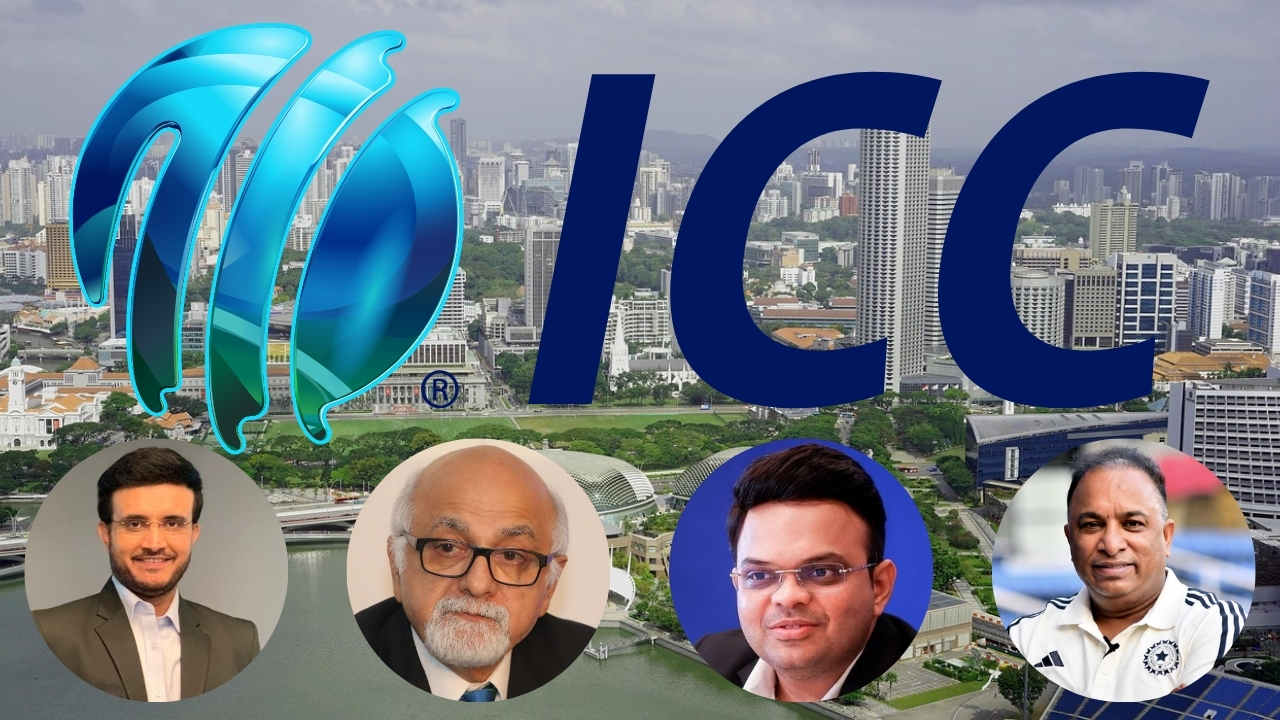
The International Cricket Council’s (ICC) 2024 Annual Conference will take place in Singapore from July 17 to 20, with major decisions expected on playing conditions, global governance, and the future of bilateral cricketing ties between India and Pakistan. The meeting will be Jay Shah’s first as ICC Chair, following his appointment earlier this year.
The selection of Singapore as the host city — finalized during ICC meetings in Harare and Victoria Falls — carries symbolic weight. The city-state is the constituency of ICC Deputy Chair Imran Khwaja and will now stage one of the most consequential gatherings in recent ICC history.
This year’s summit marks a pivotal moment for Shah, who became the youngest person to lead the global governing body and has already made an impression by announcing a “dedicated task force aimed at supporting displaced Afghan women cricketers.”
The agenda, as first reported by Cricbuzz, is set to include sweeping proposals that could reshape how international cricket is played and administered in the years ahead.
India-Pakistan cricket relations under global scrutiny
At the top of the agenda is the increasingly fraught relationship between India and Pakistan. The conference comes in the aftermath of a military flare-up between the two countries linked to a terror attack in Pahalgam, and subsequent drone and missile strikes which briefly halted both the Indian Premier League (IPL) and the Pakistan Super League (PSL).
While BCCI Secretary Devajit Saikia has denied that India is pulling out of the Asia Cup or other continental events, speculation remains that the BCCI could sever cricketing ties with the PCB, even in ICC and ACC tournaments.
This geopolitical standoff is expected to dominate discussions, with global administrators concerned about the implications for ICC events and bilateral diplomacy.
Key rule change proposals up for discussion
A major component of the Singapore summit will be the review of recent recommendations made by the ICC Cricket Committee, chaired by Sourav Ganguly. Among the most significant:
- Replacing the two-ball rule in ODIs with a single ball from the 25th over onwards to encourage reverse swing — a move intended to bring balance back between bat and ball.
- Introducing in-game clocks in Test cricket, similar to over-rate rules in limited-overs formats. The proposal would mandate 60-second intervals between overs to ensure 90 overs are completed in a day.
- Restructuring the Men’s U-19 World Cup, with a proposal to shift from its traditional 50-over format to T20, aligning it with the U-19 Women’s World Cup structure.
While a working group to further explore these changes has not yet been formed, it is widely expected that it will be constituted in Singapore and could submit formal recommendations to the ICC Board shortly thereafter.
Governance reform and the WCA challenge
The ICC is also expected to deliberate on reform proposals submitted by the World Cricket Association (WCA), previously known as FICA. The WCA is calling for an overhaul of ICC governance structures and a revision of the sport’s financial distribution model.
However, resistance to the WCA’s proposals appears strong. Discussions at the Chief Executives’ Committee (CEC) level reportedly revealed broad skepticism. The BCCI, notably, does not recognize the WCA, nor does India have a domestic players’ association.
There seemed to be general consensus within the CEC that while boards might engage with their players affiliated with the WCA individually, the report itself is unlikely to receive formal endorsement from the ICC Board.
Associate Member elections to shape ICC committees
In addition to the headline items, the conference will also see elections for the Chief Executives’ Committee (CEC) seats reserved for Associate Members. An electoral college of 45 Associate Members will vote to elect three representatives for a two-year term. The current representatives — Rashpal Bajwa (Cricket Canada), Umair Butt (Denmark), and Sumod Damodar (Botswana) — are eligible for re-election.
A defining conference for global cricket
The 2025 ICC Annual Conference is shaping up to be one of the most consequential in recent memory. With geopolitics, format reforms, and governance all on the table — and a new Chair at the helm — cricket’s global powerbrokers will face significant decisions in Singapore that could impact the sport for years to come.